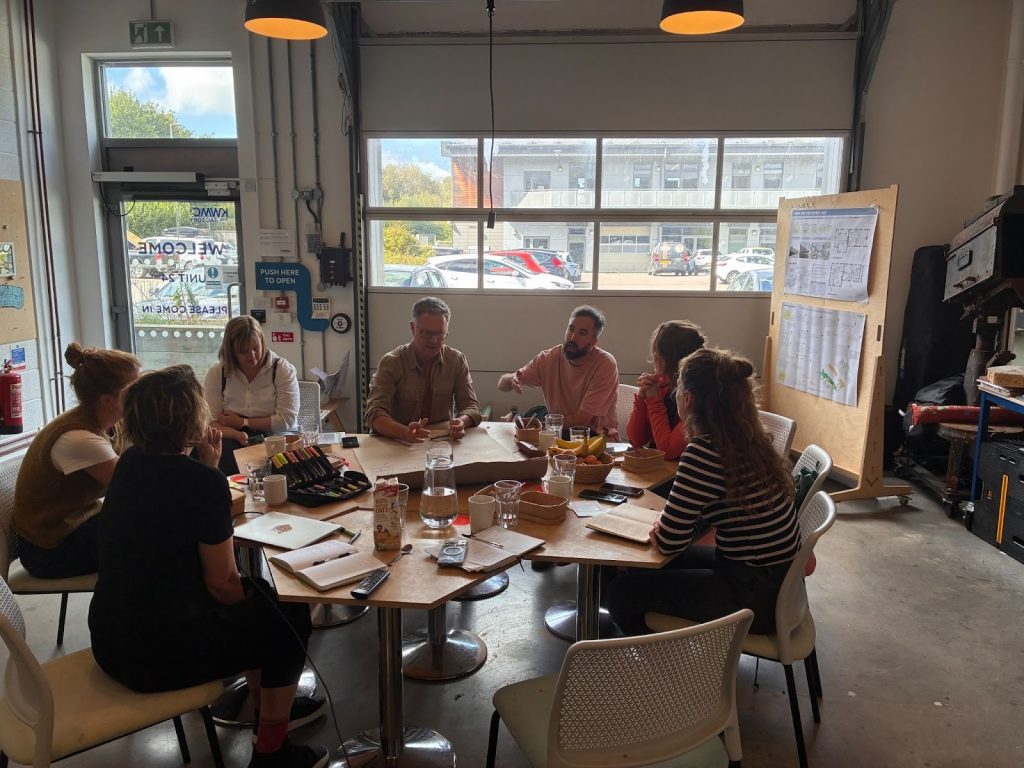





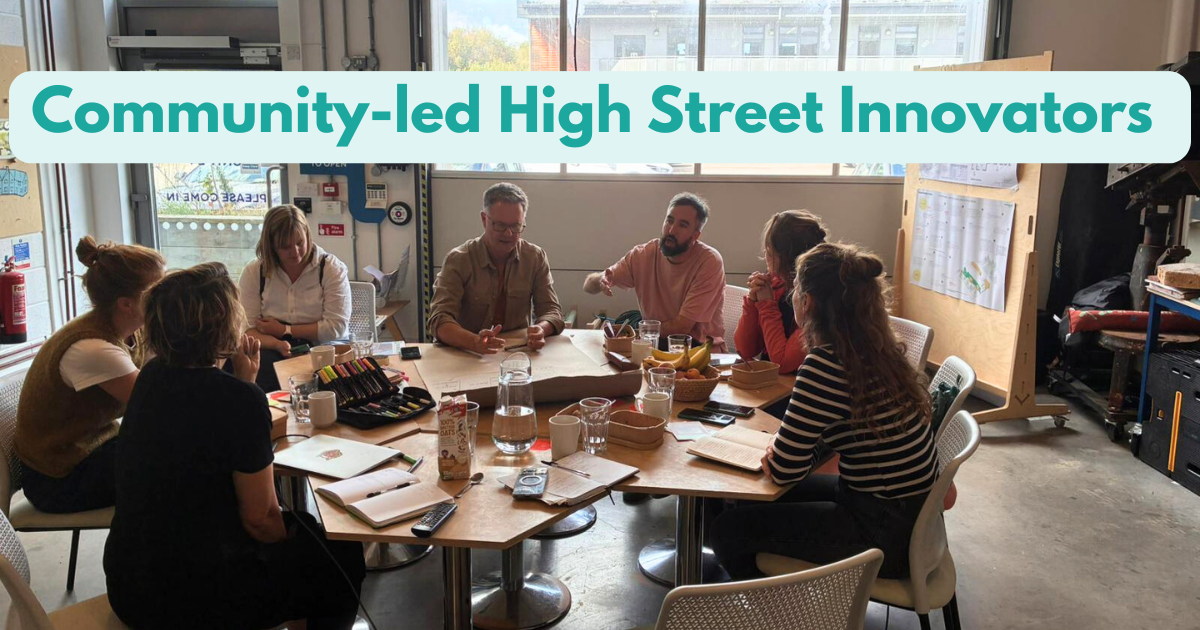
At the start of the month, Rosie, Liam and I travelled to Bristol as part of the Community-led High Street Innovators (CLHSI) programme run by Power to Change. We also added in a visit to WeCanMake, an inspiring community-led housing project.
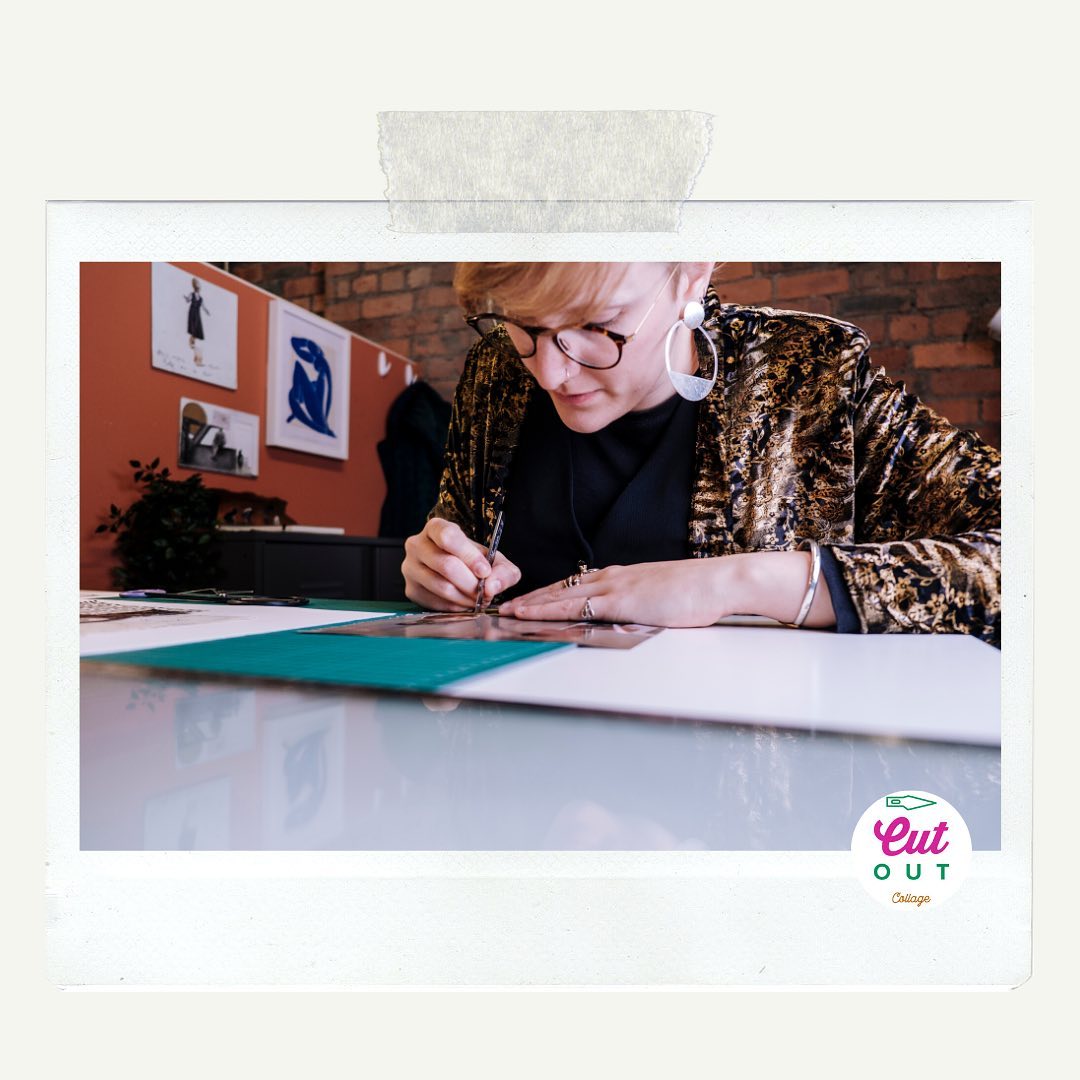
We first met Melissa Mean from WeCanMake a couple of months ago in Liverpool, where she introduced us to their innovative approach to house building. Using “cassette” style timber blocks made with their own CNC machine – aptly named MultiMax (multiple storey, maximum timber) – they’re creating a system for affordable, sustainable housing. This idea resonated with us because it echoes our own ethos: putting residents at the heart of making. Last year alone, we worked with 34 artists and creatives, generating £58k in commissions income for our community. It’s exciting to imagine applying the same principle to housing—where our community could be involved in everything from cutting timber at our Make North Docks site to sewing curtains and wiring plug sockets.
The timing of Melissa’s visit to Liverpool was serendipitous as we’re currently exploring the potential for affordable housing on the car park site we own on Lorn Street, acquired as part of Make Hamilton.
Lessons from WeCanMake
During our visit to their workshop in Bristol, we saw firsthand the depth of their research into material choices—proving that homegrown timber can safely and affordably replace high-carbon materials like steel and concrete.
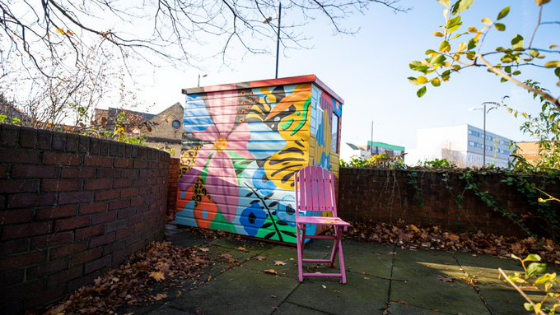
What struck me most was the way WeCanMake has brought their community along on the journey at their Rodfords Mead project. Local residents are co-creators, reimagining a fly-tipped site as a neighbourhood space. They’ve visited the forest where timber is sourced, helped build planters to demonstrate sustainable drainage, and made benches to begin sharing the site together.
Workshops have also played a key role: people made tiles—one to take home and one to contribute to the housing project—and shared meals on site. These simple but powerful acts give residents a sense of ownership, belonging, and practice in living together as neighbours.
Melissa described their approach as “urban acupuncture” – transforming small, overlooked plots of land into something vibrant and useful. This struck a chord with us. In Birkenhead, with its low density and underused land, infilling around the high street could help us create homes for life while supporting a thriving town centre.
By working closely with WeCanMake, we can benefit from their years of R&D—on everything from materials to labelling systems—and apply their learning as we begin work on Lorn Street. We left Bristol energised to reactivate our site, starting with something simple: getting electricity back on.
Shared Learning with CLHSI
This spirit of shared knowledge carried through the week as we met with other Community-led High Street Innovators.
- Southmead Development Trust is developing an extension to their high street alongside 177 new homes. Their challenges felt familiar: working at the sometimes slow pace of local councils and balancing the need for robust revenue streams to sustain community projects.
- We also visited Sparks, a former Marks & Spencer store now transformed by Artspace Lifespace into a hub for sustainability and creativity. Once a symbol of high street decline, the building is now buzzing with practical, public-facing community uses.
The Importance of Local Partners
The trip reminded me just how vital local partnerships are in keeping us connected to our community. For example:
- Amy Butterworth from Make It Happen and I signed up over 45 businesses in Argyle Independent Quarter to a WhatsApp support network, which has become a go-to place for sharing everything from contractor contacts to stewardship efforts.
- Backin’ Birkenhead workshops, run by Prosocial Place and commissioned by Wirral Council and Groundswell, have been invaluable in surfacing local priorities: “living high streets,” “circular economy,” “homes for life,” and “affordability and inclusion.”
What’s Next
I’m looking forward to our upcoming research visits: Stockport with MadLab and Dewsbury with Dewsbury Arcade Group. Both will help us continue exploring how to tackle gentrification and bring vacant high street properties back into use.
Through generous partnerships and shared learning, we can make lasting, meaningful change—not just in Bristol, but back home in Birkenhead too.